
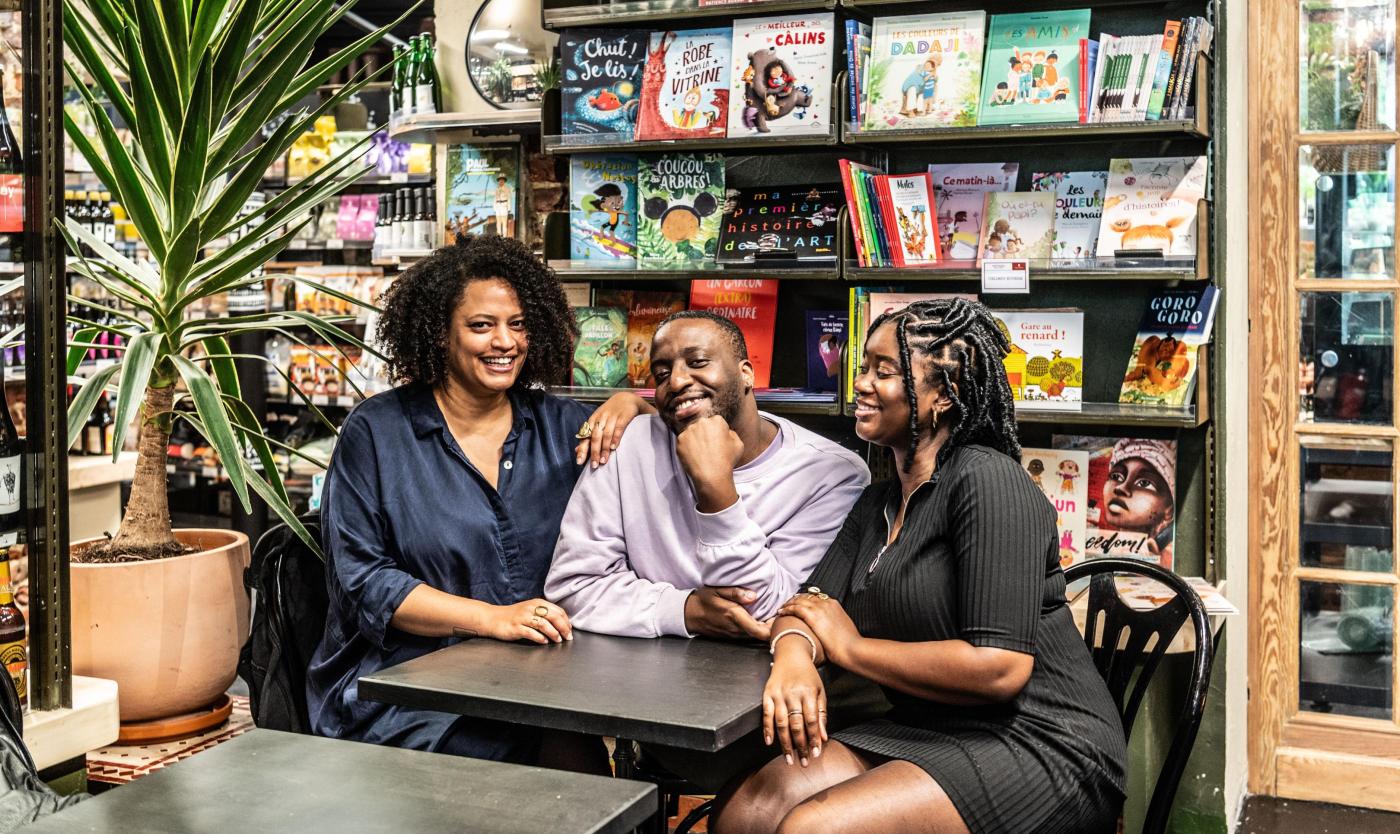
Name: Som•m•e Of Us
Core members: Olga Briard, Eric Cyuzuzo, Bettina Guigui
Goal: connecting black people into small communities through sociocultural events
Exists since: 2023
Meet up: regularly, without fixed schedule. Locations vary from our community-run space and cultural institutions to black-owned community hubs.
The thing that binds us: We look out for each other. We have each other's best interest at heart.
Our ritual: We love to wrap up our events by treating ourselves, guests, and participants with delicious sub-Saharan African food at local restaurants or letting our friend behind ‘Pacifique Cooking’ spoil us with lovely and creative vegan food.
Are new members welcome? Som•m•e Of Us isn't membership-based at the moment. We collaborate with different black collectives, artists, activists, and other brilliant minds from the diaspora and beyond.
Contact: @somme.of.us
Som•m•e Of Us is a multidisciplinary collective of young black grassroots cultural curators and community space organizers. It focusses on two types of activities: events on black people and their experiences, organised for institutional partners, and events of their own initiative. After working together to create Black History Month Belgium and dealing with internal issues in the team, Som•m•e Of Us was born. A community was already built and it would be a shame to lose this connection. This new collective gave the opportunity to extend activities and get-togethers beyond the month of March and create an all year round agenda. Collaborations with Muntpunt were preserved, where their Black Book Fair is a reoccurring success story.
by Carlo Croes
Can you tell more about the goal and community of Som•m•e Of Us?
Eric: ‘We wanted to make sure it really represented us: two black women and myself, a queer man. We pay attention to the dynamics within our community and how the world treats us. Because at the end of the day, if we put our energy into the matter, we want the outcome to reflect our living experiences.’
Som•m•e Of Us is based in Brussels. What are your personal connections to the city?
Eric: ‘Olga (the third co-creator of Som•m•e Of Us) was born and raised here. I was born in Kigali, moved to Kenya, and came to Belgium at a young age. I have always been a city kid. To me, Brussels sometimes is a bit dormant, but it offers a lot of inspiration. I get inspired by how the black community here organizes things in the margin, things that are different. I need to be here, where all these things happen, and I need to be a part of them. I am very active in the socio-cultural scene as music programmer at Vaartkapoen and nightlife programmer for Kunstenfestivaldesarts. I also like how small it is, which fosters possibilities.’
Bettina: ‘Brussels is my home. It is where I have lived the longest, even though I travelled around a lot, which symbolizes my drive to be part of things. I have been in many collectives, and have volunteered and worked for different NGO's. It made me explore different sides of Brussels. Sometimes it feels like I am living separate lives: I would never run into my work colleagues when I am going out. Some EU-bubble colleagues only recently started understanding what Im about when I leave their bubble. This collision of many different worlds is interesting. I guess it is a bit chaotic, but it is also possible to find your little niche group. As a black woman, I realize that reflecting on my black experiences in the city is so niche, so specific, that I can only discuss it in a safe space with other black people from Brussels or other cities.’
“Reading can engage in a precious way and influence your imagination or self-construct."
Why did you pick ‘Edge Of Here’ by the black British artist Kelechi Okafor for ‘1 Stad, 19 Boeken’?
Eric: ‘The stories sadly shape every experience of our lives. The characters look like us and carry the same baggage. It enlightens me to see how Okafor creates alternative futures. She moves black writing beyond theory! I find it frustrating that more and more theory gets written from the black perspective, but still nothing gets done about the injustices in society. It is exciting that authors like Kelechi Okafor say: “Whatever, I am moving past that conversation and jump into my imagination. I just create worlds.”’
Do you feel like creators should act more like ‘trailblazers’ and put themselves on a pedestal?
Eric: ‘Sometimes there is too much focus on this. I think you sometimes want to be affirmed in your normality. You are not that special.’
Bettina: ‘I agree. Feeling exceptional, feeling like the first one to accomplish something, can carry such a weight. Realising your normality allows you to rest again. Kiyemis, who we hosted at the 2024 Black Book Fair, wrote ‘Et, Refleurir’ about a woman in Cameroon who grew up in a conservative African family of farmers. She stood up against traditions and expectations placed on women like her, and this in the 1960's. It has been done before.’
They ran so you can walk.
Eric: ‘Sometimes you just want to walk. Some of them also walked and did amazing things.’
Tell me about your reading habits. How do you consume media? What is the state of representation, online or offline?
Eric: ‘The democratization of media has positive and negative effects. You can promote yourself on social media and good things will get picked up. Podcasts have democratised access to voices, and I am a huge fan of them. The developments in the media landscape make me learn new things all the time. Reading is something I mostly do online. I wish I could read more traditional books. My eyes deserve the rest.’
Bettina: ‘I have a long love story with books. A big part of my studies was focused on literature. I have also learned to read and examine at the same time. I get excited about the universe around and the creative process of books. I also read several books at the same time. Sometimes you just want a book to have a personal conversation with you. This sentiment was a revelation for me during my adolescence. Unfortunately, I did not read books about people who looked like me or described relatable perspectives of blackness as a child, but as a young adult I dove into them. Reading can engage in a precious way and influence your imagination or self-construct. I really believe that literature and books have that power. I hope we can nurture libraries with a broad collection for children, especially for black children.’
There is something very calming about holding a book and thinking: ‘this is exactly what I needed to hear’.
Eric: ‘Yes, even about things like crushes, first relationships or being a queer kid. Plus, you can read a book by yourself, nobody has to know. When I grew up, I watched the same TV shows everybody was watching. There were not that many black characters and only so many queer characters, but somehow I could still relate to ‘Dawson's Creek’ or whatever. However, it would have been even better if I would have seen representation. On screen, on paper, and in books, about people who are queer or black.’
Was ‘Edge Of Here’ a pick because of the contents of the book? What does the writer mean to you?
Bettina: ‘Kelechi Okafor means a lot to Som•m•e Of Us. We have been following her work for a while. The fact that she recently published the short story collection ‘Edge of Here’, was a good opportunity to invite her to our Black Book Fair in Muntpunt (april 2024), where she was a guest at a live audience recorded podcast in collaboration with Ayò. Most book clubs talk about theory and go on and on about it. We wanted to put the spotlight on fiction, even fantasy-fiction in this case, with aspects of dystopia and afro-futurism. This fresh perspective felt exciting, even for the most distracted audience with a short attention span. We can also imagine worlds together beyond theory, you know.’
Som•m•e Of Us tips:
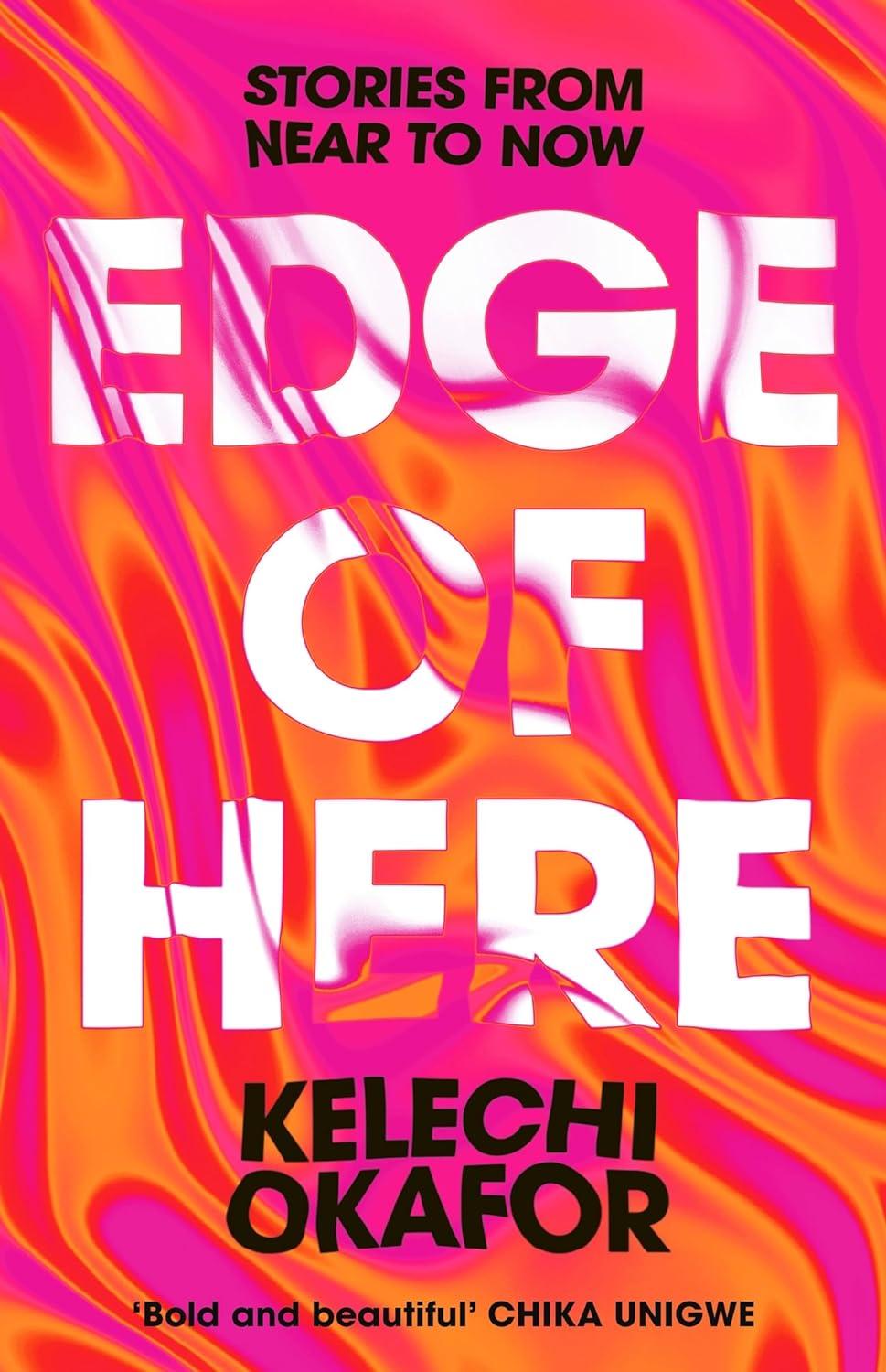
Edge Of Here • Kelechi Okafor
This short story collection combines the ancient and the ultramodern to explore tales of contemporary black womanhood, asking questions about how we live and offering a glimpse into the near future. Uplifting, thought-provoking, and sometimes chilling, these are tales rooted, but not limited by, the recognizable boundaries of our current imagination in unexpected ways.
Extra tips:
Events
Our Black Book Fair
Our Podcast Festival
Community film screening program by @recognitionbxl
Podcast
Reclaiming our Joy (Sarah Diedro Jordaõ)